
Water extraction & structural drying · Greeley, Colorado
Water Removal & Structural Drying in Greeley, CO
One call connects you with a local contractor who handles water removal and drying for wet walls, floors, and framing.
- Standing water and wet flooring
- Moisture checks for walls and subfloors
- You decide whether to proceed
Where Moisture Can Remain After Water Removal
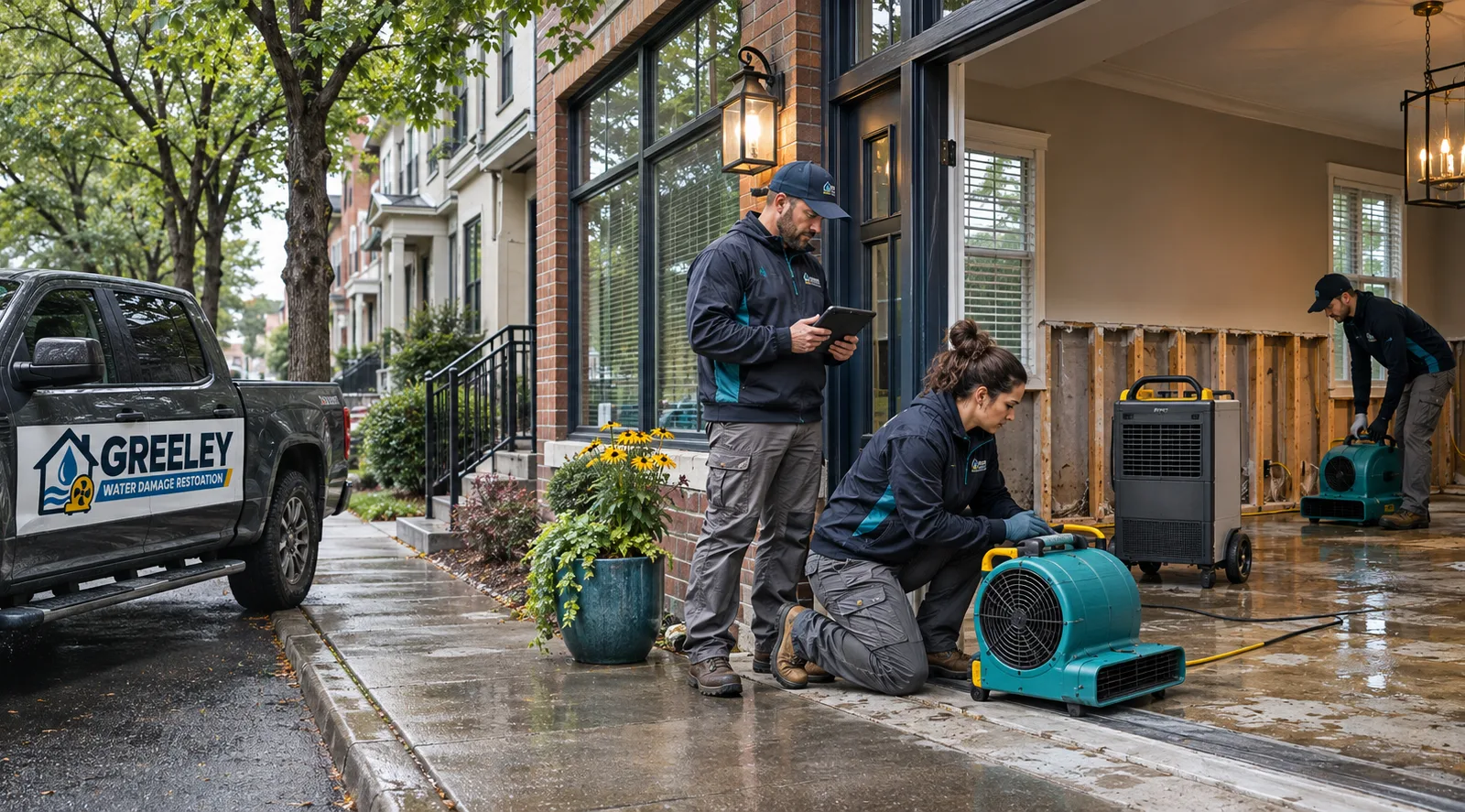
Structural drying in Greeley, CO addresses moisture held inside building materials after a plumbing leak, appliance overflow, or flooding. Removing standing water is the first part of the job. Wood framing, subfloors, drywall, and wall cavities can remain wet after the visible puddles are gone. A contractor uses moisture measurements, controlled airflow, and dehumidification to determine what can dry in place and what needs removal.
Water follows openings around pipes, floor joints, and wall plates. A wet carpet may conceal saturated padding, while a stain near a baseboard may trace back to moisture inside the wall. Surface appearance alone cannot establish whether an assembly is dry. The contractor should check affected materials and nearby areas before setting the drying plan.
Ask how the contractor checks for hidden moisture and confirms when drying is complete.
Northern Colorado's dry outdoor air does not establish whether an enclosed wall cavity is dry. Indoor humidity, material thickness, and the layers within a floor or wall still affect evaporation. During cold weather, keeping a building heated may also matter to the drying plan. Opening windows without considering outdoor conditions can work against controlled drying.
What to Ask About Water Removal & Drying
Water Extraction
Ask how standing water and soaked flooring will be handled.
Moisture Checks
Ask which walls, floors, and adjoining rooms will be checked for hidden moisture.
Materials and Drying
Ask which materials can dry in place and which may need removal.
Quote and Repairs
Ask what the quote covers and whether drywall or flooring replacement is separate.
How water removal and structural drying proceed
Connect and discuss the work
Call, enter your ZIP code, and you are connected directly with a local contractor who serves that ZIP. You can discuss the affected property, ask about their structural drying work, and decide whether to arrange an assessment.
Assess the source and moisture spread
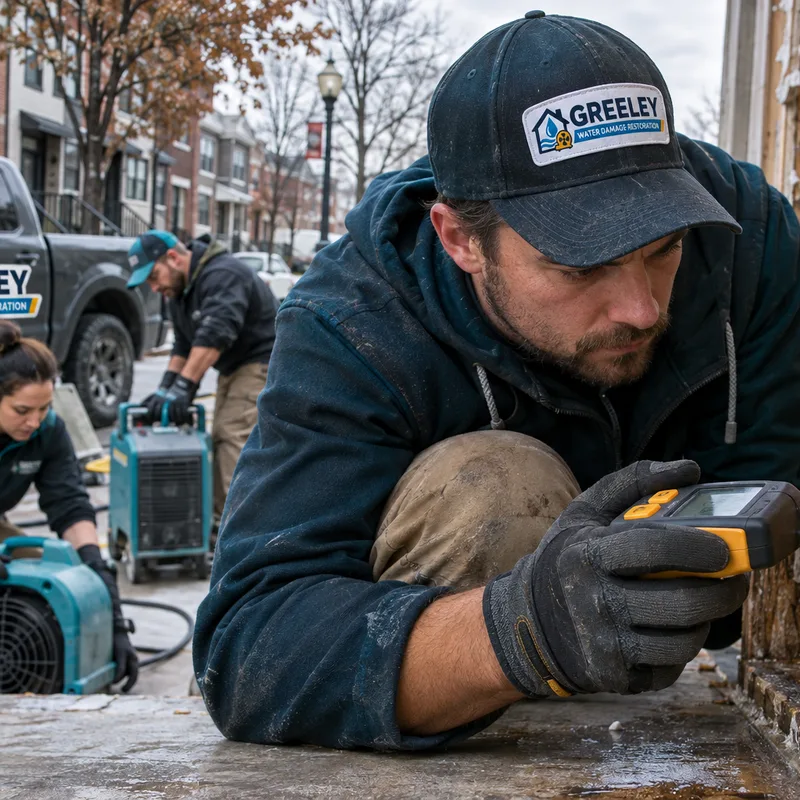
Before drying begins, the water source needs to be stopped or controlled. The contractor checks the affected materials, the extent of moisture migration, and whether contamination changes the cleanup approach. Moisture meters help map wet areas. Thermal imaging can help identify temperature differences that warrant closer testing, but it does not measure moisture by itself.
Extract water and assess materials
Water removal in Greeley may involve pumps for standing water and extraction tools for wet flooring. The contractor then assesses carpet padding, drywall, insulation, and other affected materials. Clean-water exposure may allow some materials to dry in place. Contaminated water, deterioration, or inaccessible wet layers can require removal.
Set up controlled drying
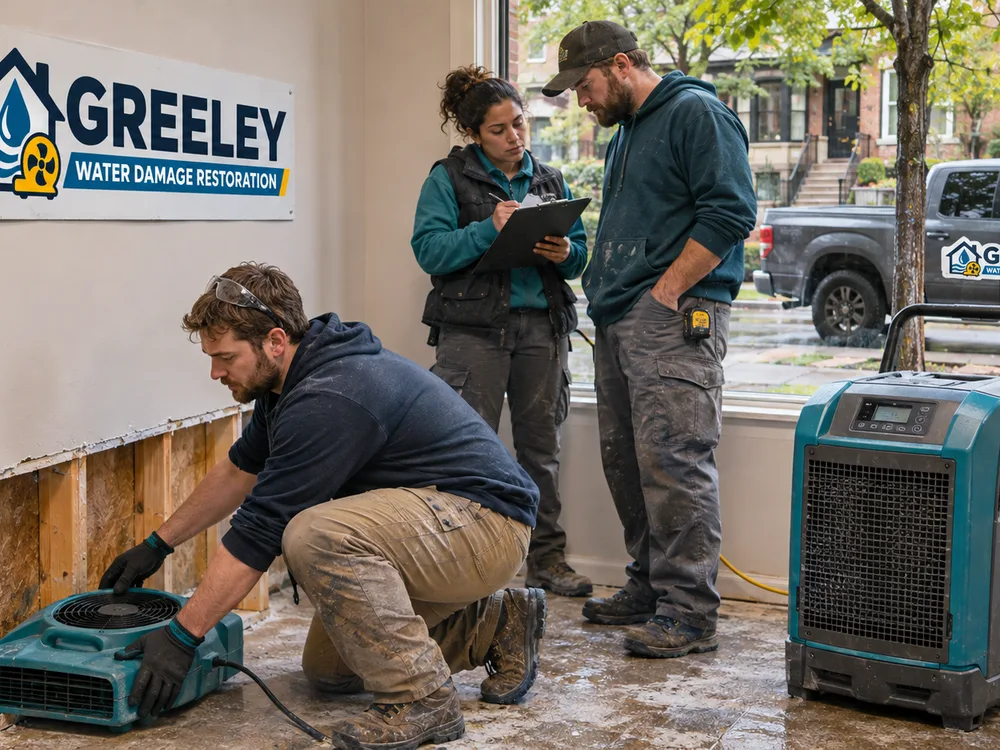
Air movers encourage evaporation, while dehumidifiers remove water vapor from the air. Depending on the assembly, the contractor may propose cavity drying, floor drying mats, or limited openings for access. Equipment selection should follow the materials and moisture conditions rather than simply filling a room with fans.
Monitor and verify the endpoint
The contractor takes repeat readings and adjusts the setup as conditions change. Drying goals can be based on comparable unaffected materials and appropriate material-specific criteria. Equipment should remain in use until measurements support ending the drying phase. Repairs and replacement finishes can then be discussed separately.
Water extraction and hidden-moisture drying are different parts of the same job.
Ask how the drying progress will be measured before repairs begin.
The materials and measurements behind structural drying
Questions to ask before structural drying begins
Can I stay in the house while drying equipment runs?
Occupancy depends on the water contamination, affected rooms, electrical safety, and access around the equipment. Drying equipment produces noise and heat, and hoses or cords may restrict normal use of a room. Ask the contractor which spaces can remain occupied and whether any affected areas need isolation.
Should I turn off the fans or dehumidifiers overnight?
Follow the contractor's operating instructions rather than switching equipment off on your own. Interruptions can change humidity and slow moisture removal. If equipment trips a breaker, leaks, or creates a safety concern, contact the contractor for direction and keep clear of electrical hazards.
Can hardwood floors be dried without removing them?
Some hardwood floors can be dried in place, but the flooring type, finish, subfloor, and extent of swelling affect that decision. A contractor may consider floor drying mats or access to the underside of the assembly. Cupping alone does not establish whether replacement is necessary, and sanding should wait until moisture conditions are suitable.
Does flood cleanup in Greeley require a different approach from a supply-line leak?
Floodwater can carry contamination that changes material removal and cleaning decisions. A flood cleanup service in Greeley, CO should assess the water source before using airflow across affected materials. Tell the contractor if water entered from outdoors, backed up through a drain, or contacted sewage so they can discuss appropriate precautions.
What records should I ask the contractor to provide?
Ask for a written scope, moisture readings, and documentation of material removal and equipment use. Photographs and progress records can help explain why the work was needed. If you have an insurance claim, ask your insurer what documentation it requires; coverage decisions remain with the insurer.
What if a musty smell remains after water damage extraction?
A persistent musty smell warrants another assessment rather than covering it with fragrance. Water damage extraction removes water, but an odor may involve concealed damp material or microbial growth that needs separate evaluation. Ask the contractor whether the affected cavities were checked and whether additional assessment is appropriate before finishes are replaced.
Will the water removal company also replace drywall and flooring?
Rebuilding may be a separate scope from extraction and structural drying. When speaking with a water removal company serving Greeley, ask who handles insulation, drywall, trim, and flooring replacement. Confirm which tasks are included in the contractor's quote before approving the work.
Get a contractor involved before wet materials are covered
A dry-looking surface can hide moisture in framing or flooring. If water reached beneath the floor or behind a wall, ask whether those areas should be checked before repairs begin.